Saturday, February 25, 2017


What is Metabolism?

This  word “metabolism” is thrown around a lot these days.

You know that if yours is too slow you might gain weight.  But what exactly does this all mean?

Well technically “metabolism” is the word to describe all of the biochemical reactions in your body.  It's how you take in nutrients and oxygen and use them to fuel everything you do.

Your body has an incredible ability to grow, heal, and generally stay alive.  And without this amazing biochemistry you would not be possible.

Metabolism includes how the cells in your body:
     Allow activities you can control (e.g. physical activity etc.).
     Allow activities you can't control (e.g. heart beat, wound healing, processing of nutrients & toxins, etc.).
     Allow storage of excess energy for later.

So when you put all of these processes together into your metabolism you can imagine that these processes can work too quickly, too slowly, or just right.

Which brings us to the “metabolic rate”. 

Metabolic rate

This is how fast your metabolism works and is measured in calories (yup, those calories!).

The calories you eat can go to one of three places:
     Work (i.e. exercise and other activity).
     Heat (i.e. from all those biochemical reactions).
     Storage (i.e. extra leftover “unburned” calories stored as fat).

As you can imagine the more calories you burn as work or creating heat the easier it is to lose weight and keep it off because there will be fewer “leftover” calories to store for later.

There are a couple of different ways to measure metabolic rate.  One is the “resting metabolic rate” (RMR) which is how much energy your body uses when you're not being physically active.

The other is the “total daily energy expenditure” (TDEE) which measures both the resting metabolic rate as well as the energy used for “work” (e.g. exercise) throughout a 24-hour period.

What affects your metabolic rate?

In a nutshell: a lot!

The first thing you may think of is your thyroid.  This gland at the front of your throat releases hormones to tell your body to “speed up” your metabolism.  Of course, the more thyroid hormone there is the faster things will work and the more calories you'll burn.

But that's not the only thing that affects your metabolic rate.

How big you are counts too! 

Larger people have higher metabolic rates; but your body composition is crucial! 

As you can imagine muscles that actively move and do work need more energy than fat does.  So the more lean muscle mass you have the more energy your body will burn and the higher your metabolic rate will be.  Even when you're not working out.

This is exactly why weight training is often recommended as a part of a weight loss program.  Because you want muscles to be burning those calories for you. 

The thing is, when people lose weight their metabolic rate often slows down which you don't want to happen.  So you definitely want to offset that with more muscle mass.

Aerobic exercise also temporarily increases your metabolic rate.  Your muscles are burning fuel to move so they're doing “work”.

The type of food you eat also affects your metabolic rate!

Your body actually burns calories to absorb, digest, and metabolize your food.  This is called the “thermic effect of food” (TEF).

You can use it to your advantage when you understand how your body metabolizes foods differently. 

Fats, for example increase your TEF by 0-3%; carbs increase it by 5-10%, and protein increases it by 15-30%.  By trading some of your fat or carbs for lean protein you can slightly increase your metabolic rate.

Another bonus of protein is that your muscles need it to grow.  By working them out and feeding them what they need they will help you to lose weight and keep it off.

And don't forget the mind-body connection.  There is plenty of research that shows the influence that things like stress and sleep have on the metabolic rate.

This is just the tip of the iceberg when it comes to metabolism and how so many different things can work to increase (or decrease) your metabolic rate.


Recipe (Lean Protein): Lemon Herb Roasted Chicken Breasts

Serves 4

2 lemons, sliced
1 tablespoon rosemary
1 tablespoon thyme
2 cloves garlic, thinly sliced
4 chicken breasts (boneless, skinless)
dash salt & pepper
1 tablespoon extra virgin olive old

Preheat oven to 425F.  Layer ½ of the lemon slices on the bottom of a baking dish.  Sprinkle with ½ of the herbs and ½ of the sliced garlic.

Place the chicken breasts on top and sprinkle salt & pepper.  Place remaining lemon, herbs and garlic on top of the chicken.  Drizzle with olive oil.  Cover with a lid or foil.

Bake for 45 minutes until chicken is cooked through.  If you want the chicken to be a bit more “roasty” then remove the lid/foil and broil for another few minutes (watching carefully not to burn it).

Serve & enjoy!

Tip: You can add a leftover sliced chicken breast to your salad for lunch the next day!

References:


Sunday, January 8, 2017

Why you shouldn't make THIS resolution


I love the New Year...a fresh start, a new page...empty pages to keep writing your story.  But we all have or still do resolve to "lose weight" and go on a "DIET".  What dread that brings to our minds...right?  Do "diets" work?  I say NO they don't , but choosing good nutrition does!


The secret to losing weight once and for all!

Every time you’ve ever tried to lose weight, you’ve done it wrong.

We’ve all done it. We’ve all been there. You go through a weight loss/diet program, you deny yourself everything you love, you torture yourself at the gym, and you lose weight. You think you’ve done a good thing for your health, for your life, for your family.
And then the weight comes back. Maybe even some extra on top.
You have failed. Again. You’re sure of it. Everyone else loses the weight and keeps it off. Normal people don’t have problems with their weight. Normal people just manage this without worry. Aren't I normal you ask yourself.  
No I am a freak of nature… EXCEPT THAT YOU’RE NOT.
Weight loss programs/Diets... are designed to make sure you fail in the long-term, so you keep coming back year after year over and over...
This year, resolve to find your perfect balance.  Try a few of my favorite tips…
  
  • Balanced decisions.  Resolve to make healthier decisions that make you feel great, not ones that make you miserable.  It’s much more simple than following a strict plan and will leave you loving your new lifestyle.  Following strict plans can leave you feeling deprived, which can lead to rebellion and that's absolutely not what we want!  Balanced decisions are far more beneficial and enjoyable long-term. 
  • Simple changes over time.  Instead of trying to do a complete overhaul of your life, start by making these smart, balanced decisions over time.  Changing your habits and doing it slowly leads to creating healthier habits that last without overwhelm and confusion. 
  • Step by Step.  Start with one new healthy habit a week.  With this method, you’re focusing on one thing that improves your health at a time as it becomes a part of your routine.  For example, for your first week, focus on drinking enough water.  Most people do not, and this is always a fabulous place to start.  You’ll see and feel changes quickly, and you can move onto your second week with another small health goal to implement. 
And if you need a program that you do once, learn a bunch and have forever...click that picture above for more info. And if you are ready to do the work, get it done once and for all...use this code at checkout: Crew4Life50

Cheryl Love


Saturday, December 31, 2016


The new year is almost here – and we just left a magical time of year filled with sparkling lights, homemade treats, loved ones and holiday feasts.  Although there is much more to this season than these large meals, the festivities most certainly can become centered around the dinner table. 

Many give up on their health goals during this time of year, planning on picking back up where they left off in the new year. Did you? It can sometimes feel like a lost cause even attempting, but I have some good news for you!  You do not have to compromise your health goals this new year, and better yet, you also don’t have to compromise missing out on your favorite new years day meals.  With a few healthy tips you can implement right now and beyond, you can add some healthy additions to your meals without anyone noticing.


A few of my favorite healthy tips are…

Ditch and Switch 

Ditch the refined foods and switch them with healthier options.  For example, instead of using refined white flour and/or sugar, use almond flour or coconut sugar instead.  There are many alternatives to choose from, and you can most definitely find one that you will love – and I bet you nobody will even notice!  Aside from the sweets, you can also trade out white rice or mashed potatoes with creating cauliflower rice or mashed “potatoes” out of cauliflower.

Fresh Herbs and Spices

You can really dress up a meal by adding fresh herbs and spices to it – I personally try to use them every time I cook.  It’s incredibly affordable and simple to keep a small, fresh herb garden growing in your kitchen window, and you will always have direct access to fresh herbs.  Even better, there are incredible health properties in many of the herbs and spices we use and love.  Many of our favorite holiday spices are greatly beneficial for our health and a strong immune system, which is certainly helpful during cold and flu season.  Cinnamon, turmeric, cloves, and nutmeg are a few of these popular holiday spices that you will reap healthy benefits from, so find a place for them in your recipes anywhere you can!  

Use Different Plates

One of my favorite, most powerful tools to stay on track with my health goals is getting creative with portion control.  Instead of using dinner-sized plates, which we tend to fill, use smaller plates.  Use a mid-sized saucer or salad plate for your dinner plate, and then go back for seconds if needed.  A lot of the overeating that we do is mindless, habitual eating because it’s in front of us and we were taught to clean our plates.  Taking this temptation away helps tremendously, and you’ll very quickly learn how much you actually need to feel satisfied – I guarantee it is less than you are used to!


With these simple tips, you’ll be well on your way to not entering January feeling bloated, discouraged and off track.  A truly healthy life revolves around balance – and finding your own personal balance will take trial and error.  

Wednesday, December 21, 2016

For me it's Merry Christmas & a Very Happy New Year


A few of my favorite healthy tips are…

Ditch and Switch.  Ditch the refined foods and switch them with healthier options.  For example, instead of using refined white flour and/or sugar, use almond flour or coconut sugar instead.  There are many alternatives to choose from, and you can most definitely find one that you will love – and I bet you nobody will even notice!  Aside from the sweets, you can also trade out white rice or mashed potatoes with creating cauliflower rice or mashed “potatoes” out of cauliflower.

Fresh Herbs and Spices.  You can really dress up a meal by adding fresh herbs and spices to it – I personally use them every time I cook.  It’s incredibly affordable and simple to keep a small, fresh herb garden growing in your kitchen window, and you will always have direct access to fresh herbs.  Even better, there are incredible health properties in many of the herbs and spices we use and love.  Many of our favorite holiday spices are greatly beneficial for our health and a strong immune system, which is certainly helpful during cold and flu season.  Cinnamon, turmeric, cloves, and nutmeg are a few of these popular holiday spices that you will reap healthy benefits from, so find a place for them in your recipes anywhere you can!  
  
Use Different Dishes.  One of my favorite, most powerful tools to stay on track with my health goals is getting creative with portion control.  Instead of using dinner-sized plates, which we tend to fill, use smaller plates.  Use a mid-sized saucer or salad plate for your dinner plate( I actually use a salad plate all the time), and then go back for seconds if needed.  A lot of the overeating that we do is mindless, habitual eating because it’s in front of us and we were taught to clean our plates.  Taking this temptation away helps tremendously, and you’ll very quickly learn how much you actually need to feel satisfied – I guarantee it is less than you are used to!

 With these simple tips, you’ll be well on your way to not entering January feeling bloated, discouraged and off track.  A truly healthy life revolves around balance – and finding your own personal balance will take trial and error. Balance doesn't mean you never eat fudge again (that won't happen here for sure), but it means you choose when you eat it and savor every bite!


I have been so blessed this year.  It has been a year of recovery from my stroke, a year of figuring out who I really am in this realm of coaching and a year of the new normal.  I am still very passionate about coaching and supporting your efforts to be the best version of healthy you can be...but it was a year of learning moderation and balance for me too.  Becoming more mindful of my choices and eating with intention.  

My Christmas wish for you is the same...dig in this year...get to know you! Reach out for support on the journey...I am here for you!

Cheryl Love
Health Coach/Personal Trainer


Friday, October 7, 2016

3 Ways to Control Your Appetite

3 Ways To Control Your Appetite
Welcome and thanks for checking this out!

Is one of the main reasons holding you back from healthy eating the fact that you're worried you'll be hungry or “hangry”?
You've tried diets and pills and potions maybe (and lasted about 2 days flat) because that hunger sets in that makes you unable to function optimally, and to be honest, makes you quite unpleasant to be around. Hangry!
Or you hate prep and thinking about food all the time?
You've been there, right? So have I.

Weight loss and eating healthy does NOT have to mean you'll be battling hunger 24/7. Here are 3 simple things you can do to control your appetite and re-train your body...
     

  • Don't drink your calories. Simple concept, right? Focus on drinking water and not loading up on calories from soda or other sweet drinks.
  •  Eat slowly and chew your food well. Slowing down while eating helps you to eat less and enjoy your meal. Put your utensils down between each bite, and chew each bite thoroughly before swallowing.
  • Stop eating before you're full. Training yourself to eat to satisfaction instead of eating until you're about to pop will drastically change your relationship with food. Begin trying to stop eating when you feel satisfied, which will be much easier to gauge when you're eating more slowly in Tip #2
    It's about "eating mindfully"...making choices based on food as fuel and enjoying the food! There are tips and tricks to that!  Join me in the journey of mindful eating by getting your free E-book here! Take the next 7 days and expand your mindful eating journey!


Thursday, May 26, 2016

Sleep...it is necessary,right?


Want to get Healthy?  Take a Nap!
How often do you hear someone say, “I had a great night’s sleep last night!” or “I feel refreshed and energetic!”?  Probably not very often.  Feeling sluggish seems to be the new normal.  In fact, according to the National Sleep Foundation, it is the new normal:  most Americans are sleep-deprived.  But not getting enough sleep may be causing more trouble for you than just that pesky drowsy feeling:  it could be seriously harming your health.


Why aren’t we sleeping?

Centuries ago, it was common for people to sleep 8 to 9 hours each day.  But now, only about 25% of Americans get 8 or more hours of sleep.  The reasons we are not sleeping are many.  We live in a 24/7 society—practically anything we want to do is available around the clock, from fitness centers to pharmacies to department stores. 

We are working long hours, transporting our kids to activities, trying to make time for friends and fitness and entertainment.  When the heat is on, the first thing to go is usually sleep.  And it’s usually not even a conscious decision to skimp on sleep-we just get in bed a little later most nights, because we are so pressed and pushed. 

But even when we get into bed, we aren’t guaranteed sleep.  The National Sleep Foundation reports that 60% of Americans have sleep problems.  That means more than half of us struggle to sleep.  And it is taking its toll.

Dangers of sleep deprivation

"The foundations of good health are good diet, good exercise and good sleep, but two out of three doesn't get you there,"1
-- Dr. Anne Calhoun, neurology professor,                           University of North Carolina.
Eating healthily and getting plenty of exercise are not enough to make up for the danger that sleep deprivation poses to your health.  Adults need around 8 hours of sleep each night, although some studies indicate that as little as 7 and one-half hours can be sufficient.  Getting less than that can have serious consequences:

·         Risk of Cardiovascular Disease:  If you get less than 6 hours of sleep each night and have disturbed sleep, you have a 48% greater risk of developing or dying from heart disease and a 15% greater risk of developing or dying from a stroke.2  Lack of sleep can cause high blood pressure, blocked arteries, stroke, kidney disease and dementia. 

·         Obesity: Sleep shortage is directly linked to obesity.  When you don’t get enough sleep, two powerful hormones that control hunger are disrupted.  The result is that you feel hungrier and have fewer sensations of feeling “full.” 

But without enough sleep you will also feel more stressed, which encourages the production of the hormone cortisol in your body.  This hormone causes you to crave high-carbohydrate foods such as potato chips and brownies, and then deposits those carbs as fat around your belly—the most dangerous place to store fat.

Pre-diabetes is also a risk for those who don’t get enough sleep.  Trying to get by on less than 6 hours of sleep per night can cause impaired glucose tolerance. 

·         Compromised immune system:  Why is it that two people can be exposed to the same germs, but only one of them gets sick?  The reason is the immune system.  If your immune system is functioning well, you can ward off many illnesses.  But if something happens to compromise your immune response, you will be vulnerable to infections, bacteria, viruses, and even some autoimmune diseases such as arthritis and asthma.

When you do not get enough sleep, your immune system becomes stressed and compromised.  You actually have a decrease in white blood cells, and those that remain are less active.  The result is that you will get sick more often.

·         Impaired exercise performance:  As if the threat of heart disease, obesity and immune suppression weren’t enough, lack of sleep can negatively impact your fitness efforts.  It’s not uncommon for people to struggle to maintain their normal level of workout intensity when they are sleep deprived.  You just won’t have the energy to push through.  Also, your muscles repair and rebuild while you sleep:  if you don’t allow your body this recovery time, you will be at a significant disadvantage during your next workout.

Make time for sleep

The truth is, if you don’t make time now for adequate sleep, you will likely be forced in the future to make time for illness.  It may take significant effort to arrange your schedule and priorities to carve out time for more sleep, but the payoff will be increased health, energy and productivity!
Ready for a nap?

Sources:
1http://www.cbc.ca/news/health/story/2010/12/02/f-sleep-tips.html

2http://www.guardian.co.uk/lifeandstyle/2011/feb/09/dangers-sleep-deprivation


Thanks for reading!  Please tell me about your best sleep in the comments.

Cheryl Love
INHC

Wednesday, April 20, 2016

Water, Water ... Sure ways to drink enough!

Water, water everywhere...but not a drop to drink.

The Rime of the Ancient Mariner


Of course we don't have that problem.   Water is everywhere...some clean, some dirty, some free flowing, some bottled...so it's always available here.  There are some places that's not true, we are lucky for the most part! SO do we use our water with responsibility and for our good? 

The average adult human body is 50-65% water, averaging around 57-60%. The percentage of water in infants is much higher, typically around 75-78% water, dropping to 65% by one year of age. Body composition varies according to gender and fitness level, because fatty tissue contains less water than lean tissue. * http://chemistry.about.com/od/waterchemistry/f/How-Much-Of-Your-Body-Is-Water.htm

SO then how much water should we drink?  What kind of water?  Does any fluid keep us hydrated? Very good questions, and many doctors, trainers, health coaches answer them differently.  Drink clean water ...I choose spring water over tap but if your tap is clean it's better than none.  Do other fluids hydrate...yes but that doesn't mean you shouldn't dink water as our bodies don't process things like coffee, tea and juices or "gasp" soda's the same way.  That means the fluid can't be used by all parts of our bodies,

How do you remember to "always be drinking water"?  Here 3 for sure tips!


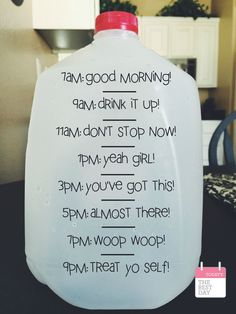
#1 Make it convenient so it becomes a habit.
 Many people find it helpful to get a large water bottle (I recommend 1 liter), fill it in the morning and carry it with you throughout the day, drinking regularly and refilling once (or more) in the afternoon. This has become quite common to see people carrying their water bottles to work, the gym or social events. It's ok to add some lemon for flavor or infuse other fruits. My favorite is pineapple and strawberries.  Cucumber and Mint is good too. Here's a couple more:
Citrus Bliss: helps to alkalize the body -  3 lemon slices  2 lime slices (or Use Doterra Essential Oils)  
Rosemary & Grapefruit: This helps to detoxify the liver while giving you an added boost of vitamin C. -  1 Grapefruit, w/o the rind and - 1 Sprig of Fresh Rosemary (or Use Doterra Essential Oils)  

#2 Drink half your body weight in water. 
 If you work from home or are in your home much of the day, a good option can be to get a half gallon pitcher, fill it in the morning and drink glasses from it throughout the day. This way you can track when you have drunk the amount you want. A good goal is half your body weight in ounces. For example, if you weigh 150 pounds, drink 75 ounces a day. If you weigh 200 pounds, drink 100 ounces a day.

#3 Set a goal each day. 
 Yet another option (and my favorite) is to count how many glasses you drink per day and have a goal number. All of our water glasses at my house are 12 oz. I keep a glass next to my bathroom sink. And I keep a glass in a certain spot in the kitchen that I reuse (to save on dishes!) I try to drink 2 glasses early in the morning and 2 glasses mid morning. When I add the water I drink with meals and when I am at my office I get a good amount. If by dinnertime I have not gotten at least 4 glasses, I just start drinking. 
Or uses a tool:


Well it's almost 11AM...time for me to drink up..You go get yours too!

We have moved....if you landed here we have a new site!                     www.imaginefit.biz/blog/               Come on over ...